Peptide Pureness Evaluation Solution
Exactly How To Check Out A Peptide Pureness Test: Hplc, Mass Spectrometry And Coa Interpretation For Uk Researchers 2026
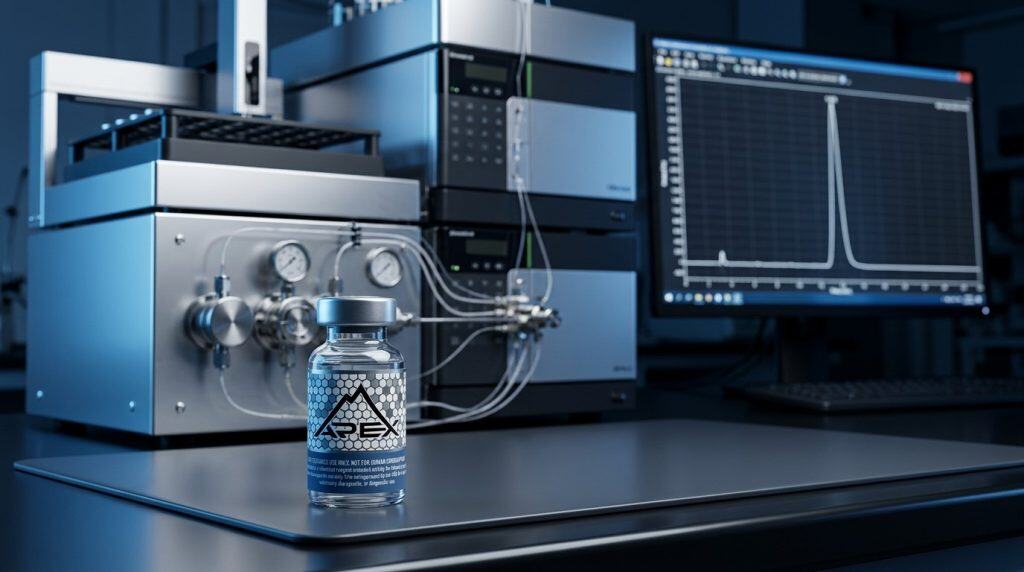
HPLC informs you what percentage of your sample is the main compound-- however it does not validate what that major compound actually HPLC Testing is. A top with the appropriate retention time might theoretically be a relevant peptide with similar hydrophobicity. Mass spectrometry supplies identity verification by determining molecular mass straight. We review peptide size, series structure, anticipated molecular weight, adjustment kind, salt form, example history, and designated downstream use before defining the logical course.A single common chromatographic technique is typically not nearly enough for peptides that are hydrophobic, extremely fundamental, very closely related in turn, or partly purified. We offer HPLC and UPLC purity evaluation process that concentrate on beneficial separation rather than just producing a percent. We make analytical operations around the sample type, series features, adjustment profile, and choice context. Tasks may involve unrefined intermediates, purified peptides, saved whole lots, client-supplied products, or products created through our customized peptide synthesis platform.
Crude, Desalted, And High-purity: Understanding Peptide Grades
For scientists, acquiring validated peptides isn't simply a formality-- it's the structure of trustworthy experiments and study reproducibility. Poor-quality peptides (those with unseen contaminations, inaccurate series, or broken down components) can lead to misleading data and irreproducible results. As a matter of fact, proteins and peptides are amongst one of the most widely used laboratory reagents, yet studies have revealed that their high quality is usually poor, resulting in inadequate information reproducibility. Starting with correct laboratory validation is consequently an essential part of a researcher's quality assurance process.
Not every application demands 99% purity, and purification is a significant component of peptide production price. Trace amounts of solvents used during synthesis and filtration-- acetonitrile, dimethylformamide (DMF), dichloromethane-- can continue to be in the final product. These are typically present at very reduced degrees in properly produced peptides and are regulated by ICH Q3C guidelines for acceptable limitations. If the target peptide's peak make up 99.1% of the overall optimal area, the peptide is reported as 99.1% pure by HPLC. Several trustworthy research study peptide vendors use third-party laboratories; some conduct in-house screening with publication of lab qualifications.Clinical Aesthetics Item Growth
If the COA notes "complete contaminations", that complements the pureness number (e.g., 98% purity indicates 2% overall pollutants). Many COAs additionally specify recognized or "specified contaminations" versus unspecified ones, each with their private portions if over a particular limit. This degree of information assists researchers understand if any kind of small peptide spin-offs exist. If you see several huge peaks of comparable height, you're considering either a low-purity sample or a mix. If the primary top has a visible "shoulder"-- a bump on one side-- that commonly shows a carefully associated impurity (like a removal peptide) that the column couldn't fully solve. The peptide is passed through a straightforward filtration step (typically gel purification or a fast reversed-phase cleaning) to get rid of salts, small-molecule byproducts, and scavengers from the bosom step.FDA and the European EMA have actually established guidelines mandating comprehensive analysis and quality control for peptide products to ensure safety and security and effectivenessr. In the context of pharmaceutical or clinical-grade peptides, lab recognition is indispensable to fulfilling these standards. As an example, prior to a peptide medication can enter human trials, its producer should show the identification, pureness, strength, and safety and security of the peptide through confirmed logical approaches. Peptide purity testing data Get more information are necessary in preclinical studies and need to be included in investigational new medicine (IND) applications and later on new medication applications (NDAs).
- Our operations is designed to move from sample context evaluation to interpretable peptide information with minimal analytical ambiguity.
- All items are sold for study, laboratory, or logical objectives only, and are not for human use.
- This is the grade where the cost increases most dramatically, due to the fact that attaining that last 1-- 3% of purity calls for discarding a significant fraction of the manufactured material.
- FDA and the European EMA have actually established standards mandating complete analysis and quality assurance for peptide products to make sure safety and security and effectivenessr.
The gold criterion for determining peptide pureness is high-performance fluid chromatography, globally abbreviated as HPLC. If you see a pureness portion on a peptide item, it probably came from an HPLC evaluation. This issues since peptides are constructed one amino acid at a time with solid-phase peptide synthesis (SPPS). At each action, there's a little possibility that something fails-- an amino acid does not connect, the incorrect adjustment occurs, or a side reaction generates an unintended byproduct. Over a chain of 10, 20, or 40 amino acids, those tiny per-step mistake rates substance.